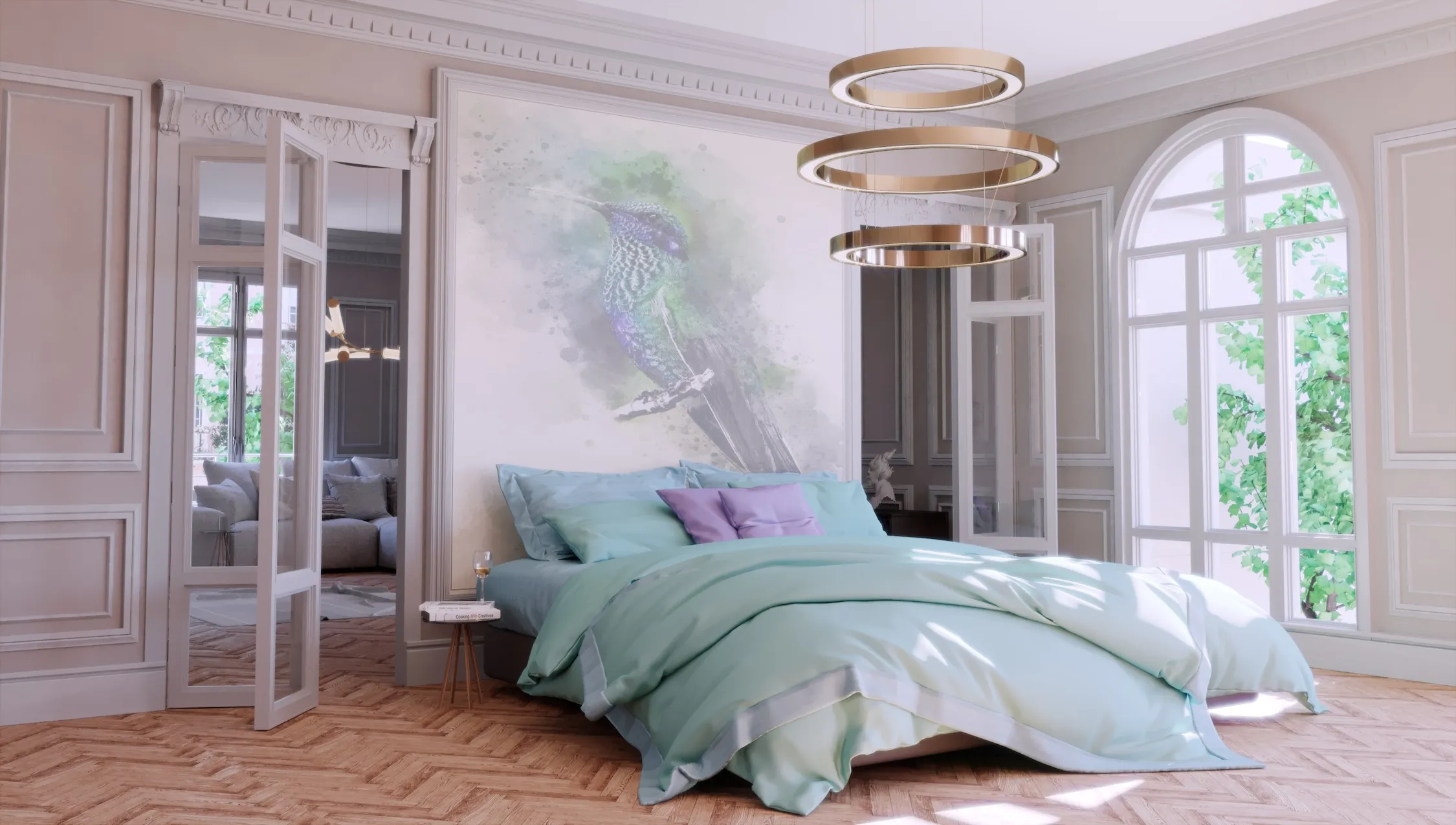
Property marketing has become exceptionally good at creating first impressions. Photorealistic CGI, architectural films, premium brochures and carefully art-directed development websites can communicate aspiration long before a building is complete.
But the moment a prospective buyer moves from admiration to a practical question, the experience often begins to fracture. Availability may sit in a spreadsheet. Floor plans may be hidden inside a PDF. Specifications may live in another document. Local information may be generic. Detailed questions are passed to a sales representative who has already answered the same enquiry many times that week.
The result is a familiar gap between property presentation and property sales. The development looks sophisticated, but the digital journey remains passive.
Interactive property marketing platforms are beginning to close that gap. By connecting CGI visualisation, property data, buyer guidance, local-area information and enquiry tools within one branded environment, a development website can become more than a brochure. It can become a working sales experience.
“The future of off-plan property marketing is not another digital brochure. It is a connected environment that can show, explain and respond.”
Why Conventional Property Development Websites Reach Their Limit
Most property websites are designed around content categories rather than buyer progression. A visitor is expected to move between gallery pages, availability tables, floor-plan downloads, location maps and contact forms, assembling the complete picture for themselves.
That approach creates three commercial problems.
- Information becomes fragmentedThe visual story, practical property information and sales process are separated across pages, documents and systems.
- Buyer questions interrupt momentumA prospective buyer may be interested enough to ask a specific question, but not yet committed enough to call or complete a formal enquiry.
- Sales teams inherit poorly informed leadsWhen the website provides only broad information, sales representatives must restart the discovery process from the beginning.
This is particularly significant in off-plan property sales. Buyers are being asked to make decisions about a home they cannot yet walk through. Confidence has to be constructed through imagery, information, context and responsiveness.
From Presentation to Participation
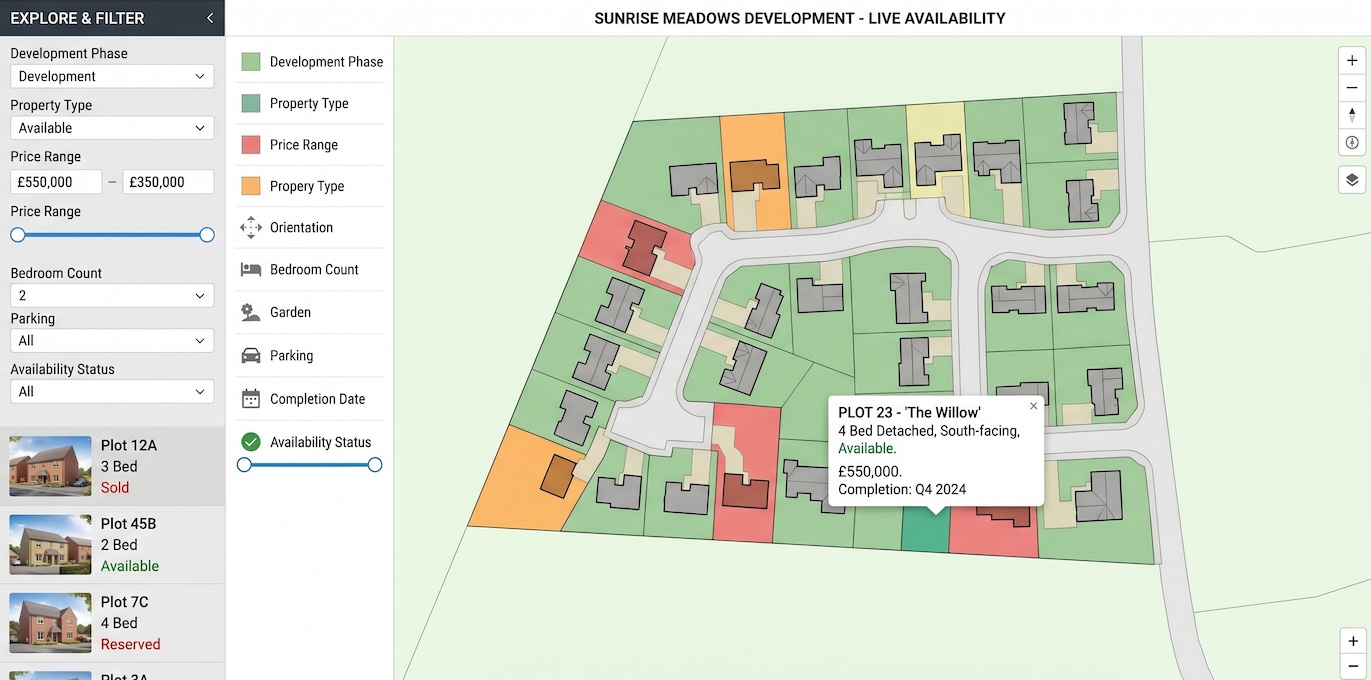
An interactive property sales platform changes the buyer’s role. Instead of receiving the same sequence of information as every other visitor, the buyer can actively investigate the development.
They can explore available homes, compare property types, review specifications, understand the local area and ask detailed questions while their interest is active.
The most important change is not visual. It is structural. CGI, data and guidance stop behaving like isolated marketing assets and begin working as a connected system.
OriginThe Priory Developments Origin Story
The thinking behind Synth Space™ began through work created for Priory Developments.
The original project combined high-quality CGI property visualisation with an interactive development website. Rather than treating the imagery as a standalone marketing deliverable, the experience was designed to help buyers understand the apartments, explore the specification and investigate the wider location.
A conversational property guide extended that idea further. Prospective buyers could ask questions about availability, fixtures, local amenities, schools, council tax and other practical considerations in multiple languages.
Priory Developments was the originating use case and design foundation. Synth Space™ is the broader platform architecture that Visually Sonic subsequently developed from that work.
That project exposed a larger opportunity. Property developers did not simply need better individual assets. They needed a framework capable of connecting visualisation, information and buyer interaction around each development.

CGI as Part of the Sales System
CGI is often commissioned as a set of campaign images. Within a connected platform, those visualisations can do considerably more.
Exterior imagery can establish architectural identity and setting. Interior CGI can clarify finishes and atmosphere. Animated sequences can explain movement through the development. Interactive imagery can support specification choices and property comparison.
The value of property visualisation increases when it sits beside the information required to act on it. A buyer should be able to see a home, understand its specification, check its availability and move towards an enquiry without restarting the journey elsewhere.
Connected PlatformWhat a Connected Property Sales Platform Can Include
The precise implementation should be shaped around the development rather than imposed as a generic portal. However, the core architecture may connect several capabilities.
Photorealistic exterior and interior imagery, architectural animation and cinematic development films.
Property types, floor plans, pricing, specifications and availability presented within the buyer journey.
Voice or text guidance answering approved questions about the development, homes, location and sales process.
Useful signals showing which properties, questions and content are attracting buyer attention.
Why Buyer Guidance Matters
Property buyers rarely follow a perfectly linear journey. One visitor may begin with price. Another may care about schools, commuting or accessibility. An overseas buyer may need the entire development explained in another language. A downsizer may want detailed reassurance about parking, storage and ongoing costs.
A conventional FAQ page cannot anticipate every route. A conversational guide can respond to the question the buyer actually has, using an approved development knowledge base.
This does not replace the sales team. It improves the point at which the sales team becomes involved. Routine information can be delivered immediately, while complex or commercially sensitive conversations are directed to a person.
Connected IntelligenceConnected Intelligence, Not Disconnected Technology
The presence of advanced technology does not automatically create a better property experience. A chatbot added to a poor website remains a chatbot added to a poor website. A plot selector disconnected from the development story remains a utility rather than a sales journey.
The opportunity lies in what Visually Sonic describes as connected intelligence: visual, conversational and data-led technologies designed around one coherent buyer experience.
Each element should reinforce the others. The CGI creates desire. Property information builds understanding. The AI concierge answers uncertainty. Availability creates relevance. The enquiry route converts interest into action.
“Technology should not sit on top of property marketing. It should connect the entire journey from first impression to qualified enquiry.”
The Commercial Case for Property Developers
A connected property marketing platform can create value across several stages of a development.
- Market earlierCGI and interactive information allow homes to be presented before physical completion.
- Improve buyer confidenceVisual, practical and location-based information can reduce uncertainty around off-plan purchases.
- Reduce repetitive enquiriesCommon questions can be answered immediately while preserving direct access to the sales team.
- Generate better-prepared prospectsBuyers can understand the development before arranging a viewing or conversation.
- Extend across phasesNew inventory, phases and content can be added without rebuilding the complete digital experience.
The platform also becomes a reusable commercial asset. Unlike a campaign that expires after launch, the environment can evolve as the development moves from pre-launch to active sales, reservation and potentially post-purchase support.
PlatformFrom Bespoke Project to Synth Space™
Synth Space™ is the platform architecture developed from these principles. It is not a standard property portal with a developer’s logo applied. Each implementation is shaped around the scheme, audience, brand, available assets and sales process.
The underlying modules may be reusable, but the experience should feel specific to the development. A luxury apartment scheme, regeneration project and build-to-rent community should not communicate in the same way.
The objective is to create one connected digital destination capable of presenting the architecture, explaining the proposition, answering buyer questions and supporting conversion.
What Comes NextThe Future of Off-Plan Property Marketing
The next generation of property websites will not be judged only by how polished they look. They will be judged by how effectively they help a buyer understand, compare and act.
Static brochures will not disappear. CGI will remain essential. Human sales expertise will remain essential. But these elements will increasingly sit inside more responsive digital environments.
For developers, the question is no longer simply whether a development needs a website. It is whether that website is functioning as a brochure or as part of the sales operation.