
It knows who it is
A defined character, purpose, point of view and relationship to the organisation.
We design narrative-led conversational agents with a defined voice, memory, knowledge and role—built to guide, explain, perform and respond across digital and physical experiences.
Conversational technology becomes more valuable when it has a clear identity and narrative purpose. The agent may embody a founder, character, expert, host, guide or brand voice—but it must remain useful, credible and recognisable.
We combine character development, approved knowledge, conversation design, voice, interface and escalation logic into one coherent experience.
The result can live on a website, inside an exhibition, at an event, through WhatsApp, by phone or as part of a larger transmedia world.
The audience experiences the role, voice, judgement and usefulness of the agent.
A defined character, purpose, point of view and relationship to the organisation.
Approved information, sources, boundaries and clear uncertainty handling.
Dialogue shaped around the audience, context, tone and desired next action.
The same identity can persist across film, voice, text, social and live experience.
A convincing agent is not a prompt attached to a widget. It requires narrative, knowledge, interaction and operational design.
Personality, tone, history, visual presence and behavioural rules.
Structured organisational information, approved material and retrieval logic.
How users enter, what they ask and how responses move them forward.
What the agent must not claim, when it should defer and how humans remain involved.

A virtual ambassador can continue through conversation, podcasting, social content and recurring narrative while preserving the same personality and world.
The strongest agents have a specific job rather than trying to answer everything for everyone.
A persistent character or spokesperson capable of explaining the organisation, appearing in media and continuing the conversation.
Useful for launches, reputation, media ecosystems and audience community.A venue-specific guide that provides practical, multilingual information across access, facilities, routes and preparation.
Useful for hospitality, attractions, museums, stadiums and public venues.An approved expert voice that can explain complex products, policies, research or professional expertise in context.
Useful for founders, consultants, universities, healthcare and technical organisations.A historical, fictional or educational character designed to respond consistently within the rules of its world.
Useful for exhibitions, heritage, learning, entertainment and transmedia projects.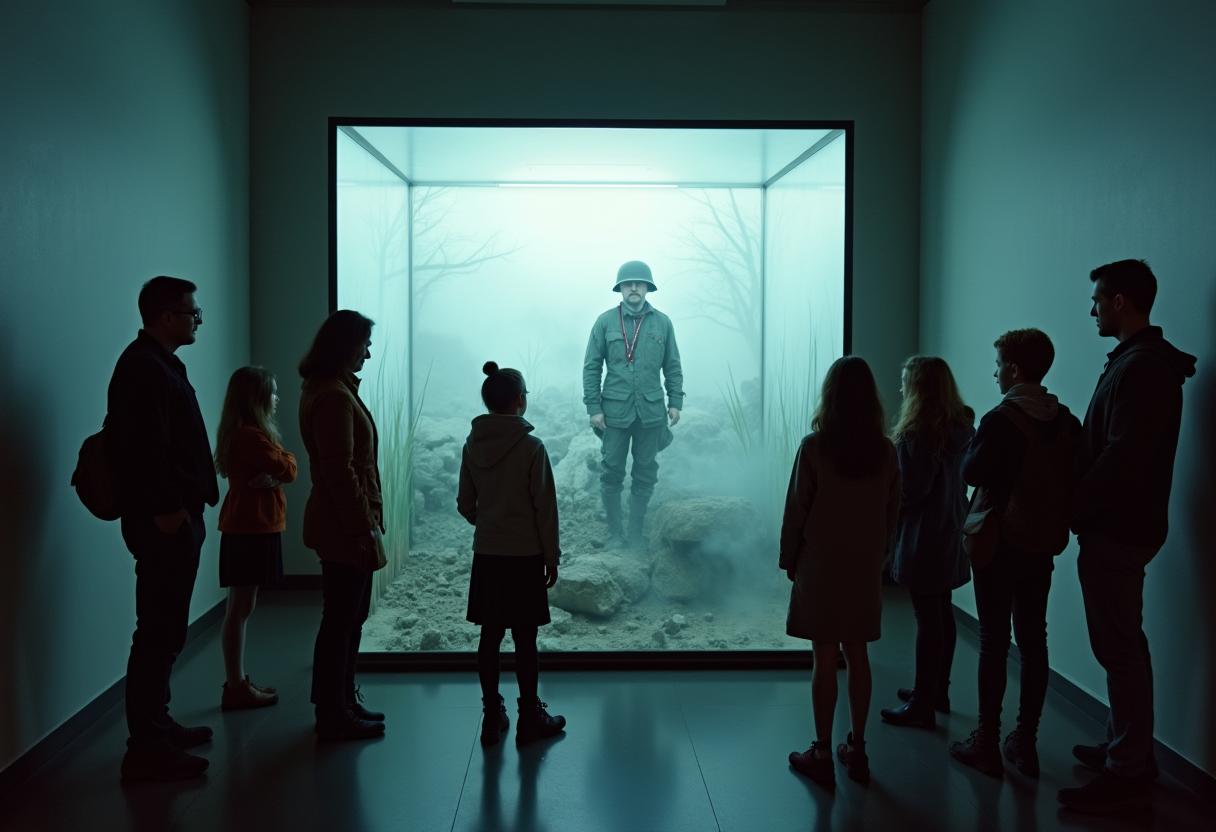
Conversation creates personalised routes through history, products, places and ideas.
A convincing voice must never come at the expense of accuracy, transparency or operational responsibility.
Responses are grounded in defined organisational material rather than unrestricted invention.
The agent understands subjects it may discuss and where uncertainty should be stated.
Questions requiring judgement, safeguarding or personal intervention are routed appropriately.
Knowledge, conversation patterns and user behaviour can be reviewed and improved.
We begin with the audience and job the agent must perform, then build the identity, knowledge and technical system around it.
We establish what the agent is, who it serves and the result it should create.
We create the voice, behavioural rules, approved sources and narrative continuity.
We test questions, responses, tone, boundaries and delivery channels.
We launch the agent, connect required systems and refine performance through use.
Bring us the audience, knowledge and role. We will determine the right character, conversation model and delivery system.
Discuss a Conversational Agent →