
A Brand Designed as a World
DESHINO began with identity, but identity was never the destination. A case file on constructing a graphic culture across product, ecommerce, film, music and connected storytelling.
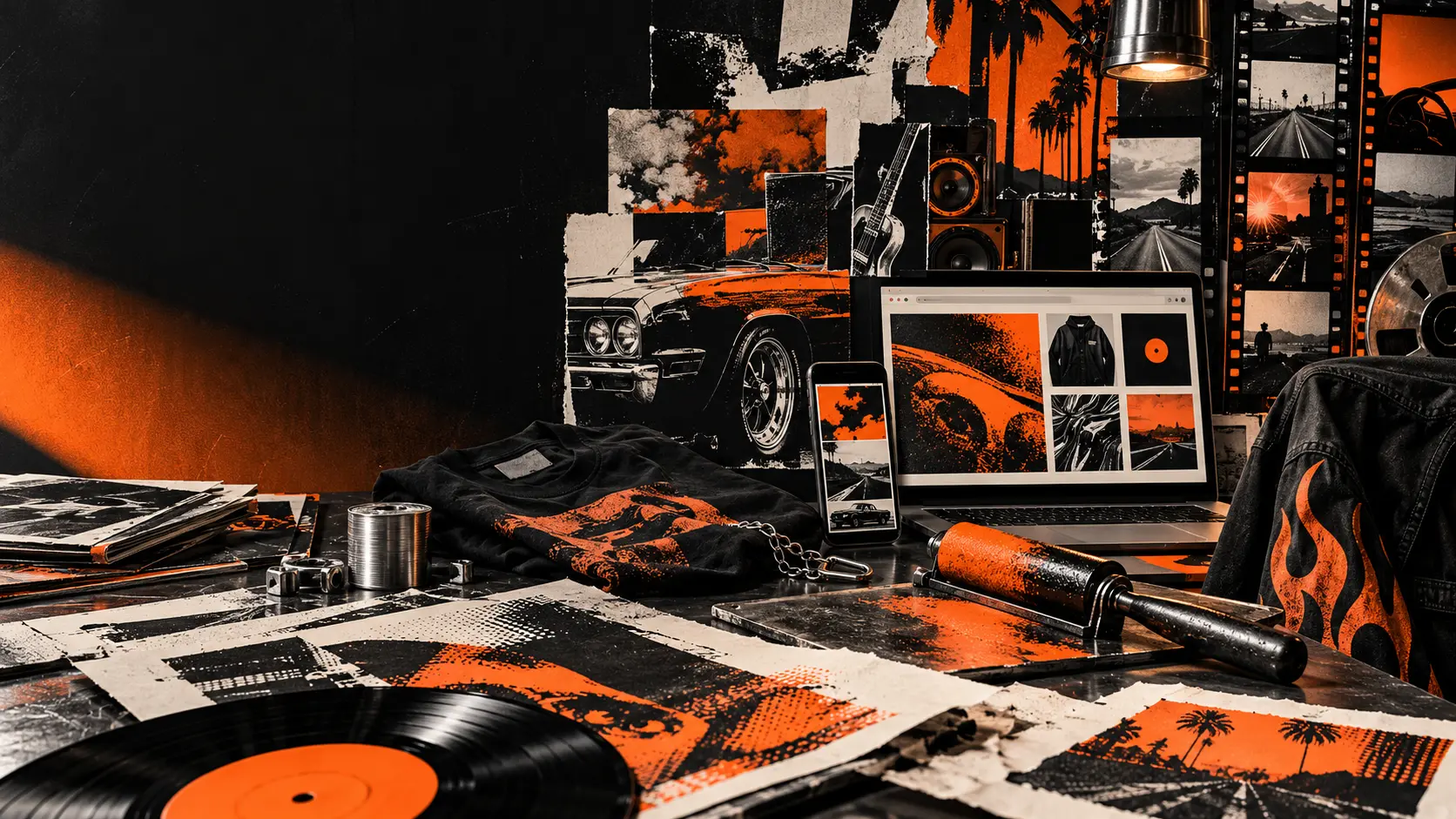
A logo can identify a business. A world gives people somewhere to enter, recognise, revisit and belong.
Most brands are assembled from the outside in. A name is chosen, a mark is drawn, a palette is approved and a set of templates is produced. The business then attempts to pour itself into those containers. DESHINO was developed in the opposite direction: by deciding what kind of world it was, what that world believed and how it should behave before deciding how it should advertise.
Identity was the entrance, not the destination
DESHINO describes itself as independent graphic culture. That is more useful than a conventional category such as apparel, print or ecommerce because it establishes an organising idea rather than a product boundary. Clothing, objects, film, photography, music, editorial and digital commerce can all belong if they share the same cultural logic.
The distinction matters. A product-led brand has to keep inventing campaigns around whatever it needs to sell next. A world-led brand can create many different expressions while remaining recognisable. The world supplies continuity.
“The most useful brand question is not ‘what should this look like?’ It is ‘what can happen here without breaking the world?’”
Rules create freedom
A convincing world is not created by adding more material. It is created by establishing rules strong enough to make different material feel related. For DESHINO, those rules include a collision between custom culture and contemporary graphic design; a visual language that can carry both precision and abrasion; objects presented as artefacts rather than inventory; and a tone that avoids both heritage nostalgia and trend-chasing streetwear.
Within those rules, separate collections can acquire their own identities. Combustion & Chrome can occupy one part of the world while Graveyard Supply Co. occupies another. They do not need to look identical. They need to feel as though the same intelligence selected them.
- PremiseThe belief or tension that makes the brand worth entering.
- CodesThe visual, verbal and behavioural signals that make it recognisable.
- TerritoriesDistinct collections and stories that can expand without fragmenting the identity.
- ArtefactsProducts, films, images, sounds and printed objects that make the world tangible.
- ContinuationA reason for the audience to return after the first purchase or encounter.
Commerce is part of the story
An ecommerce site is often treated as plumbing: catalogue, filters, basket and checkout. Those functions matter, but they do not have to flatten the brand into a grid of products. The DESHINO store was designed as a commercial expression of the same world. Navigation, collection architecture, product language, moving image and editorial content all contribute to the customer’s understanding of what the objects mean.
This changes the role of storytelling. It is not a decorative layer placed above conversion. It gives products context, creates relationships between collections and makes the commercial journey more memorable. The operational system still needs to be clear and fast; the point is that clarity and character are not opposites.
A connected brand is not a matching brand
Consistency is frequently mistaken for repetition. The same lock-up, typeface and colour combination are applied everywhere until every surface says the same thing in the same voice. That produces recognition, but not necessarily interest.
Connected storytelling asks a harder question: what should each medium contribute that the others cannot? A film can establish atmosphere. Photography can turn a product into an artefact. Music can make the identity felt before it is understood. Editorial can reveal the references and people behind a collection. Ecommerce can turn that interest into an action. The identity holds these expressions together without making them identical.
The audience completes the world
A world becomes culturally meaningful when people can do more than observe it. They wear an object, recognise a reference, share an image, follow a collection into another medium or attach their own memory to it. Participation does not require a complicated loyalty platform. It begins with designing enough depth for the audience to discover and enough openness for them to interpret.
This changes the creative relationship. The brand is no longer broadcasting a finished definition of itself. It is establishing a recognisable territory and inviting people to move through it. Every touchpoint should reward attention while remaining understandable to somebody arriving for the first time.
Worldbuilding still requires discipline
The language of worlds can become an excuse for excess: too many sub-brands, unexplained symbols and stories that matter more to their creators than their audience. The test is not how much lore exists. It is whether the world makes the offer clearer, more desirable and easier to extend.
That requires governance. New ideas should be tested against the premise and codes. Does this collection reveal another credible part of DESHINO, or is it merely an attractive distraction? Does a collaboration add cultural meaning, or only borrowed reach? A world without editing becomes a mood board. Editing is what turns atmosphere into identity.
From campaign assets to cultural memory
Campaigns are designed to peak and disappear. Worlds accumulate. Each new object or story can strengthen what came before, provided it adds meaning rather than noise. That accumulated memory is commercially useful: it lowers the burden on every new launch to introduce the brand from zero and gives existing customers a reason to pay attention again.
DESHINO is therefore less a demonstration of graphic styling than a demonstration of an operating model. Start with a premise. Establish rules. Build connected expressions. Let commerce live inside the world rather than interrupt it. The result is not merely a brand that looks coherent. It is a brand capable of generating culture of its own.