

CharacterThe Dust Oracle
A recurring figure gives the world mystery, authority and a recognisable point of view.
The Impossible imagines a desert music and arts festival where Victorian machinery collides with future sound systems. Its cinematic AI production began with a coherent world, then developed the characters, costumes, structures, atmosphere and visual rules needed to make that world believable.
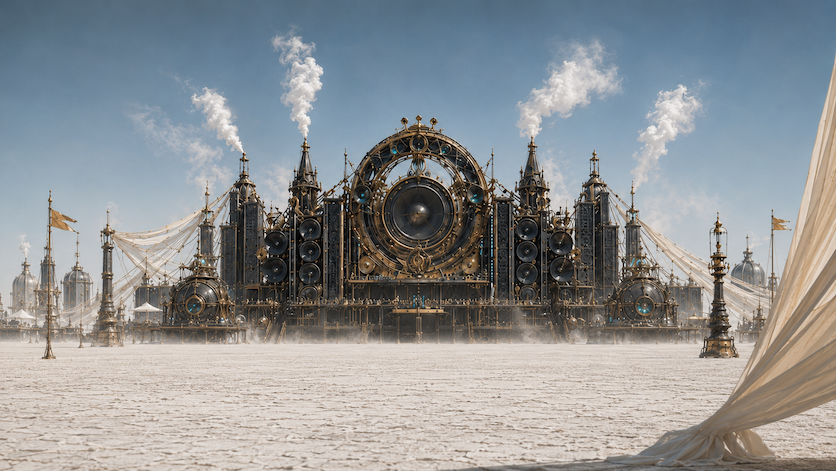
Before generating individual scenes, the film needed its own logic. Materials, costume, machinery, light, landscape and performance were developed as parts of one connected visual language.
A recurring figure gives the world mystery, authority and a recognisable point of view.
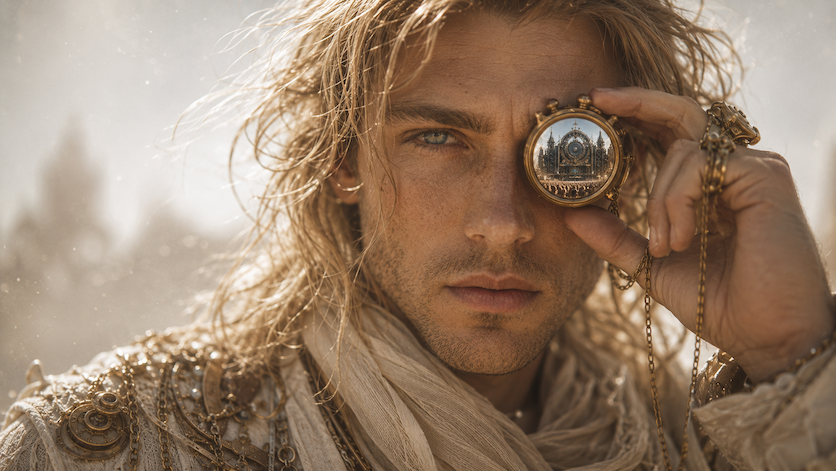
Recurring objects and materials make an invented world feel authored rather than randomly generated.
The value lies in deciding what belongs, what does not and how every image, movement and sound contributes to the same creative idea.

Supporting characters suggest a culture that continues beyond the edge of the frame.

Generative production creates scale, architecture and performance that would be difficult to capture conventionally.

The scale only matters when the audience can feel the people, movement and shared experience within it.

Colour, dust and directional light bind separate scenes into one cinematic environment.
The Impossible demonstrates how narrative design and disciplined art direction can give generative AI video production continuity. Characters recur. Materials and colours remain connected. Spectacle is balanced with quieter human moments. Every shot contributes to the identity of the finished film and creates material that could extend naturally into a wider campaign.
The Impossible demonstrates how cinematic AI video production can create more than one finished film. A coherent world provides the visual language for shorter edits, character stories, campaign imagery, sound and interactive extensions.

The main edit establishes the pace, scale and emotional character of the world. It becomes the source from which every connected campaign asset can develop.

Quieter encounters and recurring figures give the spectacle a human centre. Individual moments can become their own chapters without losing the identity of the wider film.

Scenes can be reshaped for shorter formats while retaining the same characters, atmosphere and visual language.
Because the visual rules were defined before production, every extension can feel related rather than assembled from disconnected content.
Explore AI Film Production
Portraits, performance and environmental details can become poster frames, launch imagery, thumbnails and supporting editorial assets.
The festival, characters and visual mythology provide the creative foundation for interactive websites, launch environments and immersive digital experiences.

Music, mechanical texture, atmosphere and impact give the edit its pulse and make the visual world feel physically present.
The Impossible was created through a directed AI video production process connecting narrative, art direction, shot development, generative production, editing, music and sound. Each stage solved a different part of the same creative problem.

Every shot needed a purpose within the film: what it revealed, how it moved, where the camera belonged and what the audience should feel.
The project began with a clear proposition: an impossible festival presented with enough cinematic conviction to feel remembered rather than generated.
Characters, costume, brass machinery, desert light, lenses, colour and texture were developed as a shared system before the final sequence took shape.
Reference frames, composition, camera movement and motion tests were iterated shot by shot. Images were selected for narrative function and continuity, not novelty alone.
The selected shots were shaped through structure, rhythm, transitions, grading and careful continuity decisions until they behaved like one film rather than separate generations.
Music established the momentum while layered crowd, machinery, fire and environmental sound gave the invented festival physical presence.
For The Impossible, sound had to do more than accompany the pictures. Music carried the film’s scale and rhythm, while crowds, machinery, fire, wind and movement gave its impossible environment weight, distance and life.

The finished film demonstrates what directed AI video production can achieve when generative tools are part of a complete creative process rather than the idea itself.
The Impossible brings original characters, environments, spectacle, editing, music and sound into one coherent cinematic experience.
A distinct premise, visual language and atmosphere developed specifically for the film.
Characters, composition, movement, edit and continuity directed towards one intended audience experience.
Generative production connected with editing, grading, music and sound design rather than treated as a standalone effect.
We create cinematic AI films, launch films and campaign content for organisations with a story worth building around.